

Table of Contents
- Why Dogs Pull on the Leash and What It Means
- Prepare Your Dog and Environment Before Training
- Choose the Best Harness for Dogs That Pull
-
The 7-Step Training Method to Stop Pulling
- Step 1: Get Your Dog's Attention Before Moving
- Step 2: Stop Walking When the Leash Becomes Tight
- Step 3: Reward Walking Beside You
- Step 4: Change Direction When Your Dog Pulls
- Step 5: Use Consistent Verbal Cues
- Step 6: Gradually Progress to Busier Environments
- Step 7: Practice Short Sessions and Build Consistency
- What to Do When Your Dog Pulls on a Walk
- Loose Leash Walking Training: Building Long-Term Success
- How Long Does It Take to Train a Dog to Walk on a Leash
- Common Mistakes to Avoid During Training
- Frequently Asked Questions
Last Updated: October 8, 2026
Why Dogs Pull on the Leash and What It Means
Dogs pull on the leash for a reason. It's not defiance or dominance. Your dog pulls because they're excited, curious, or trying to reach something they want. For many dogs, pulling works.
Understanding why your dog pulls is the first step toward learning how to stop dog pulling on leash.
Leash pulling also carries real risks. According to veterinary research on leash-related injuries, pulling has been shown to increase the risk of permanent tracheal and laryngeal damage in dogs.
The good news: you can learn how to stop dog pulling on leash by teaching your dog to walk beside you. It takes patience and consistency, but it works.
Prepare Your Dog and Environment Before Training
Before you start training, set yourself up for success. The environment you choose matters more than you think.
Start indoors or in a quiet space. Your backyard, a quiet hallway, or an empty room works best.
Check your dog's physical condition first. Is your dog tired, anxious, or in pain? A dog that's uncomfortable won't focus on training.
Have treats ready. Use small, high-value rewards your dog loves. Cheese, chicken, or special training treats work well.
Wear comfortable clothes and shoes. You'll be moving around, changing direction, and stopping frequently.
Choose a consistent time for training. Morning or early evening often works best.
Choose the Best Harness for Dogs That Pull
Your equipment choice directly affects your success. A harness designed for pulling control makes training easier and keeps your dog safe.
The Wonder Walker® No-Pull Harness is built specifically for dogs that pull.

A front-clip harness works with your dog's body, not against it. When your dog pulls, the harness gently guides them back toward you.
For training lines and shorter distances, the Training Lines offer flexibility.
Fit matters. Measure your dog's chest and neck. The harness should sit snug but not tight.
Check the harness regularly. As your dog grows or gains weight, adjust the fit. A poorly fitting harness won't work effectively and can cause discomfort.
The 7-Step Training Method to Stop Pulling
This method works because it's simple and builds gradually. Each step teaches your dog one clear lesson. Master each step before moving to the next.
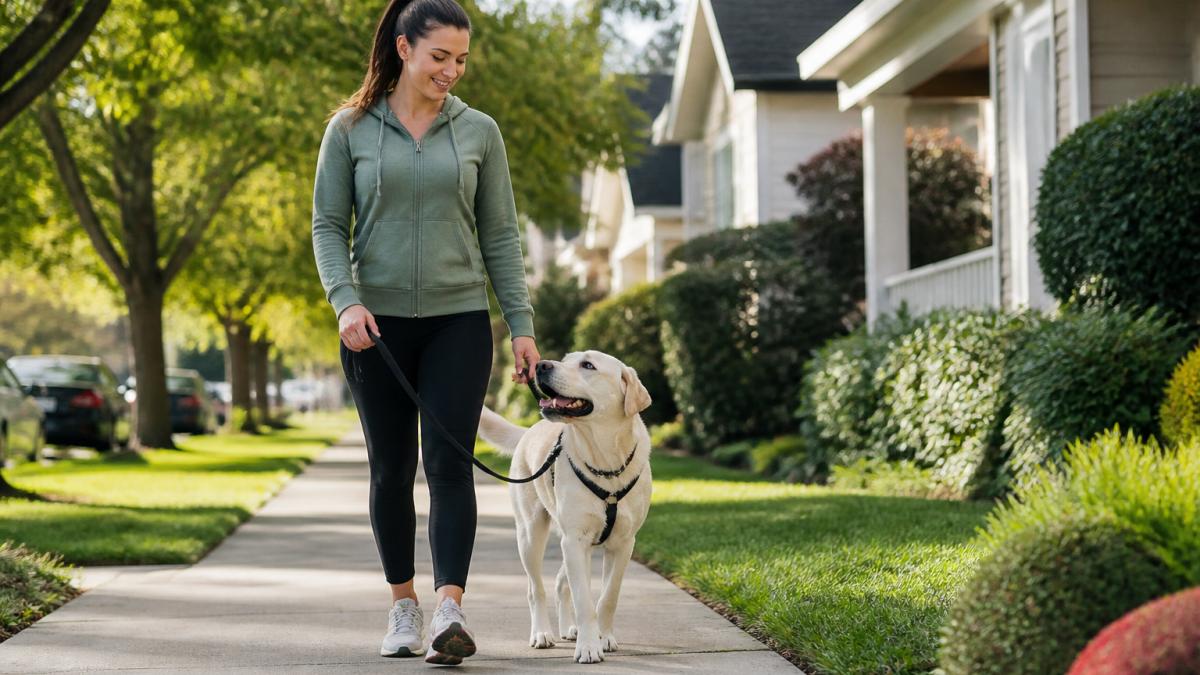
Step 1: Get Your Dog's Attention Before Moving
Your dog needs to focus on you before you start walking. Without attention, training won't work.
Stand still with your dog on a loose leash. Show your dog a treat. Say your dog's name or use a cue like "watch me." The moment your dog looks at you, reward immediately with the treat and praise.
Practice this indoors for 2-3 minutes, several times a day. Your dog learns that paying attention to you brings rewards. This is the foundation for everything else.
Once your dog reliably looks at you when you ask, you're ready to move. This usually takes a few days of short practice sessions.
Step 2: Stop Walking When the Leash Becomes Tight
This is the core lesson. Your dog learns that pulling stops progress.
Start walking with your dog on a loose leash. The moment the leash gets tight, stop moving. Stand still. Don't pull back on the leash.
Your dog will likely pull harder at first. This is normal. Ignore it. Wait for the leash to go slack, even for a second.
This teaches a simple cause-and-effect: tight leash equals no walking. Loose leash equals walking. Your dog figures it out quickly.
This step takes patience. You might not go far. That's fine.
Step 3: Reward Walking Beside You
When your dog walks with a loose leash, reward it immediately. This reinforces the behavior you want.
Walk normally with your dog. When your dog walks beside you without pulling, say "yes" or "good" and give a treat. The reward must come within one second of the good behavior.
Vary your rewards. Sometimes use treats. Sometimes use praise. Sometimes use both. This keeps your dog engaged.
Reward frequently at first. Every few steps is fine. As your dog improves, space out rewards. Eventually, your dog walks loosely because it's the normal way to walk.
Step 4: Change Direction When Your Dog Pulls
When your dog pulls ahead, don't follow. Turn and walk the other direction.
Your dog will have to follow you. When they catch up and the leash goes slack, reward them. This teaches your dog that pulling in one direction doesn't work. Following you does.
This works because it's consistent. Every time your dog pulls forward, you change direction. Your dog learns that staying with you is the only way to make progress.
Change direction smoothly. Don't jerk the leash. Just turn and walk. Your dog will adjust.
Step 5: Use Consistent Verbal Cues
Words help your dog understand what you want. Use the same cues every time.
Pick a cue like "let's walk" or "heel" or "with me." Say it in a calm, upbeat voice before you start walking. As your dog walks beside you, repeat the cue occasionally.
Your dog learns to associate the word with the behavior. Eventually, the cue alone prompts your dog to stay close.
Keep your voice calm and happy. Never use an angry or frustrated tone. Your dog responds to your emotional state. If you're frustrated, your dog feels it.
Step 6: Gradually Progress to Busier Environments
Once your dog masters loose-leash walking in quiet spaces, slowly introduce distractions.
Wonder Walker® - No-Pull Harness →
Week one: quiet backyard or empty street. Week two: residential street with occasional cars. Week three: busier neighborhood with more people and dogs. Week four: parks or busy areas.
Move slowly through this progression. If your dog starts pulling again in a new environment, go back to the previous step. This isn't failure. It's normal. Different environments are harder.
Each environment teaches your dog something new. Your dog learns to focus on you even when exciting things are happening.
Step 7: Practice Short Sessions and Build Consistency
Short, frequent sessions work better than long walks.
Train for 5-10 minutes at a time. Do this 2-3 times per day. Your dog learns faster with frequent repetition.
Keep training fun. End on a positive note. If your dog does something right, stop and celebrate.
Be consistent. Everyone in your household should use the same cues and methods. If one person rewards pulling and another punishes it, your dog gets confused.
Progress takes time. Don't rush. Most dogs show improvement within 1-2 weeks of consistent training. Solid results take 4-6 weeks.
What to Do When Your Dog Pulls on a Walk
Real walks aren't always controlled environments. Your dog might pull when they see another dog, a squirrel, or an interesting smell.
Stay calm. Your dog senses your frustration. If you get angry, your dog gets more anxious and pulls harder.
Use the tools you've practiced. Stop walking. Change direction. Get your dog's attention. Reward the good behavior.
If your dog lunges or becomes over-aroused, remove them from the situation. Cross the street. Turn around.
The Max Control Handle provides extra use and control in high-energy situations.

Don't punish pulling. Yelling, jerking the leash, or using aversive collars creates fear and anxiety. Your dog doesn't learn to walk better.
Loose Leash Walking Training: Building Long-Term Success
Loose-leash walking isn't a destination. It's a habit you build together.
The Cruiser Multi-Functional Leash gives you flexibility for different training scenarios.

Keep training sessions regular. Even after your dog masters loose-leash walking, practice it. Five minutes every other day keeps the skill sharp.
Vary your walking routes. Different environments provide different challenges. Your dog learns to apply loose-leash walking skills everywhere.
Stay patient through setbacks. Sometimes your dog regresses.
Celebrate small wins. When your dog walks a full block without pulling, that's progress.
Your dog wants to please you. They want to understand what you want. Loose-leash walking is possible for almost every dog.
How Long Does It Take to Train a Dog to Walk on a Leash
The timeline varies by dog. Age, breed, temperament, and past experience all matter.
Most dogs show noticeable improvement within 1-2 weeks of consistent training. Your dog pulls less. They check in with you more often.
Solid, reliable loose-leash walking usually takes 4-6 weeks of regular practice. By this point, your dog walks calmly most of the time.
Some dogs learn faster. Younger dogs and dogs with less pulling history progress quickly.
Consistency matters more than time. A dog trained for 10 minutes every day learns faster than a dog trained for an hour once a week.
Don't measure progress by perfection. Measure it by improvement.
Common Mistakes to Avoid During Training
These mistakes slow progress or create new problems.
Using the wrong equipment. A regular collar doesn't prevent pulling. It just puts pressure on your dog's neck.
Inconsistency. If you sometimes reward pulling and sometimes punish it, your dog gets confused.
Punishing instead of redirecting. Yelling or jerking the leash teaches fear, not obedience. Redirect your dog's behavior instead.
Expecting instant results. Training takes time. Your dog didn't develop the pulling habit in a day.
Not rewarding enough. Your dog needs to know what they did right. Reward frequently, especially early in training.
Giving up too soon. Most dogs show improvement within weeks.
Training your dog to walk on a loose leash is one of the best investments you can make. The Wonder Walker® No-Pull Harness is designed to support your training with intuitive, gentle guidance that works with your dog's natural instincts.
Frequently Asked Questions
Why does my dog pull so much on the leash?
Dogs pull because they're excited, eager to explore, or following their natural instinct to move forward. Pulling often works for them, it gets them where they want to go faster. Research published in Animals (2021) examined how dogs pull when restrained by a neck collar, showing that the pulling behavior is a natural response to restriction. By understanding this drive, you can redirect it through training rather than fighting it. Consistent reward-based training helps your dog learn that walking beside you, not pulling, earns praise and treats.
How long does it take to train a dog to walk on a loose leash?
The timeline varies depending on the dog's age, temperament, and how much pulling they've already practiced. The key is short, frequent training sessions rather than occasional long walks. Consistency matters more than duration, even 10 minutes daily beats one long weekly session.
Can a no-pull harness actually stop my dog from pulling?
A no-pull harness makes pulling uncomfortable or less effective by redirecting your dog's forward momentum, but it works best alongside training. The Wonder Walker® No-Pull Harness uses your dog's natural push-pull reflex to gently redirect pulling behavior, providing intuitive guidance without neck pressure. Harnesses alone don't teach your dog not to pull, they're a management tool that makes training easier. Combined with the 7-step method in this guide, a quality harness accelerates progress and keeps both you and your dog safe during walks.
Is it better to use a harness or a collar for a dog that pulls?
A harness is significantly safer for dogs that pull. Research in the Journal of the American Veterinary Medical Association (2024) found that leash pulling increases the risk of permanent tracheal, laryngeal, esophageal, and ophthalmic damage in dogs when using neck collars. A no-pull harness distributes pressure across the chest and back, relieving neck strain. Avoid pinch, prong, and chain collars, which can cause pain and don't address the root behavior. A quality harness paired with positive training methods protects your dog's health while you work on loose leash walking.